Beyond the Ride: The Horse-Care Basics Every New Rider Should Learn
Riding is a fraction of horsemanship — the grooming, handling and health-awareness around it being where the real partnership builds — and the new rider who learns care earns trust that shows up under saddle. The horse-care curriculum for lesson riders.
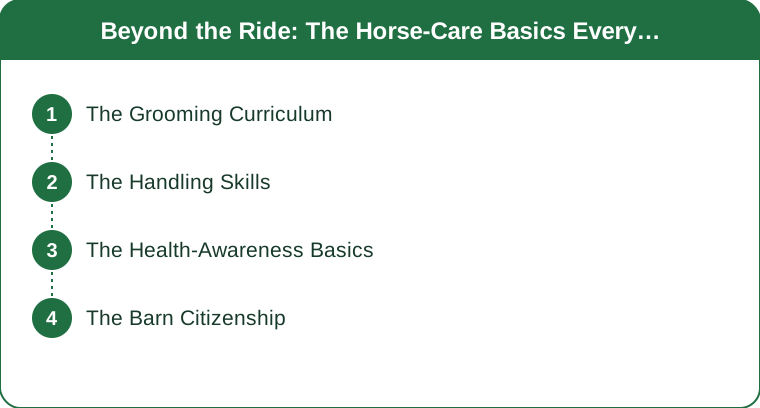
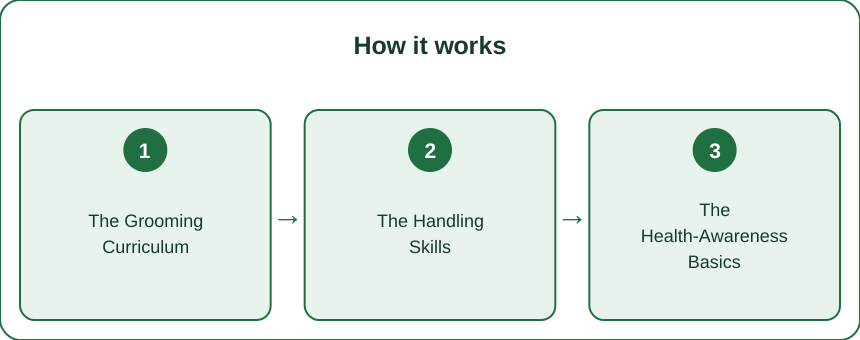
The Grooming Curriculum
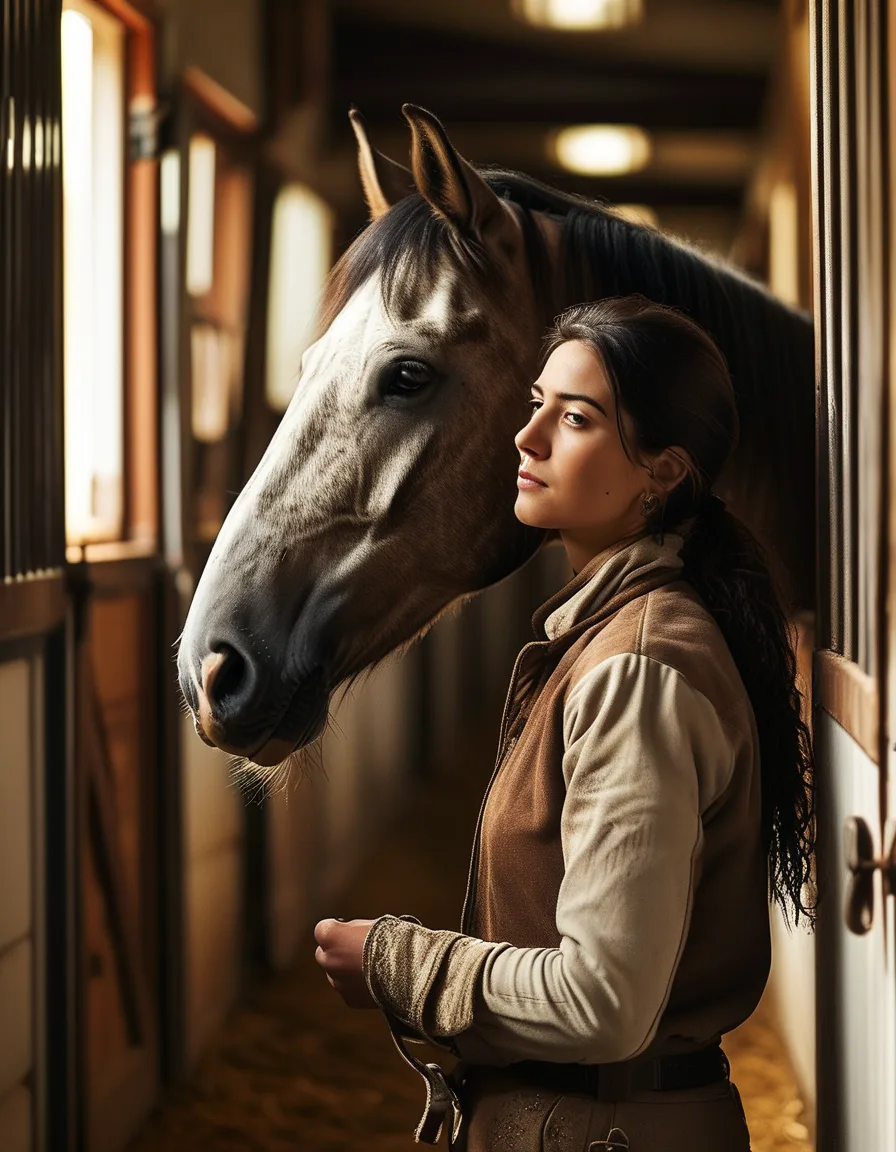
The pre-ride ritual: the grooming-kit tour (the curry comb’s circular loosening, the stiff brush’s flick-away, the soft brush’s finish — the three-brush sequence; the mane-and-tail care; the hoof pick as the non-negotiable), the hoof-picking craft (the leg asked-for correctly — the lean-and-squeeze cue; the hoof cleaned front-to-back away from the frog; the daily-check habit that catches problems per the prevention doctrine), the grooming-as-inspection principle (the hands-on pass finding heat, swelling and cuts — the grooming being a health scan wearing a chore costume; the changes reported to instructors), the bonding function (the grooming as the relationship deposit from the bonding doctrine — the mutual-grooming instinct that horses read; the calm-handling practice that builds YOUR confidence too per the groundwork doctrine), and the tacking basics (the saddle-pad placement, the girth tightened gradually, the bridle patience — the tack checks that instructors verify; the two-stage girth as the horse courtesy).
The Handling Skills
Safe and confident around horses: the approach rules (the shoulder approach in the horse’s sight — the voice announcement; the blind-zone awareness: directly behind and directly in front), the leading technique (the position at the shoulder, the lead rope held correctly — never wrapped around the hand; the horse walked, not dragged; the stop-and-stand teaching), the space language (the horse’s pressure-and-release communication from the groundwork doctrine — the personal-space consistency that earns respect; the treat etiquette: the flat-palm delivery and the barn’s treat policy honored), the body-language reading (the ears, tail and posture vocabulary — the pinned ears and swishing tail as messages; the relaxed lower lip and soft eye as the good signs per the horse-communication basics), the tying safety (the quick-release knot and the never-tied-by-reins rule), and the fear honesty (the respectful caution being correct around thousand-pound animals — the confidence built by competence, not bravado per the confidence doctrine).
The Health-Awareness Basics
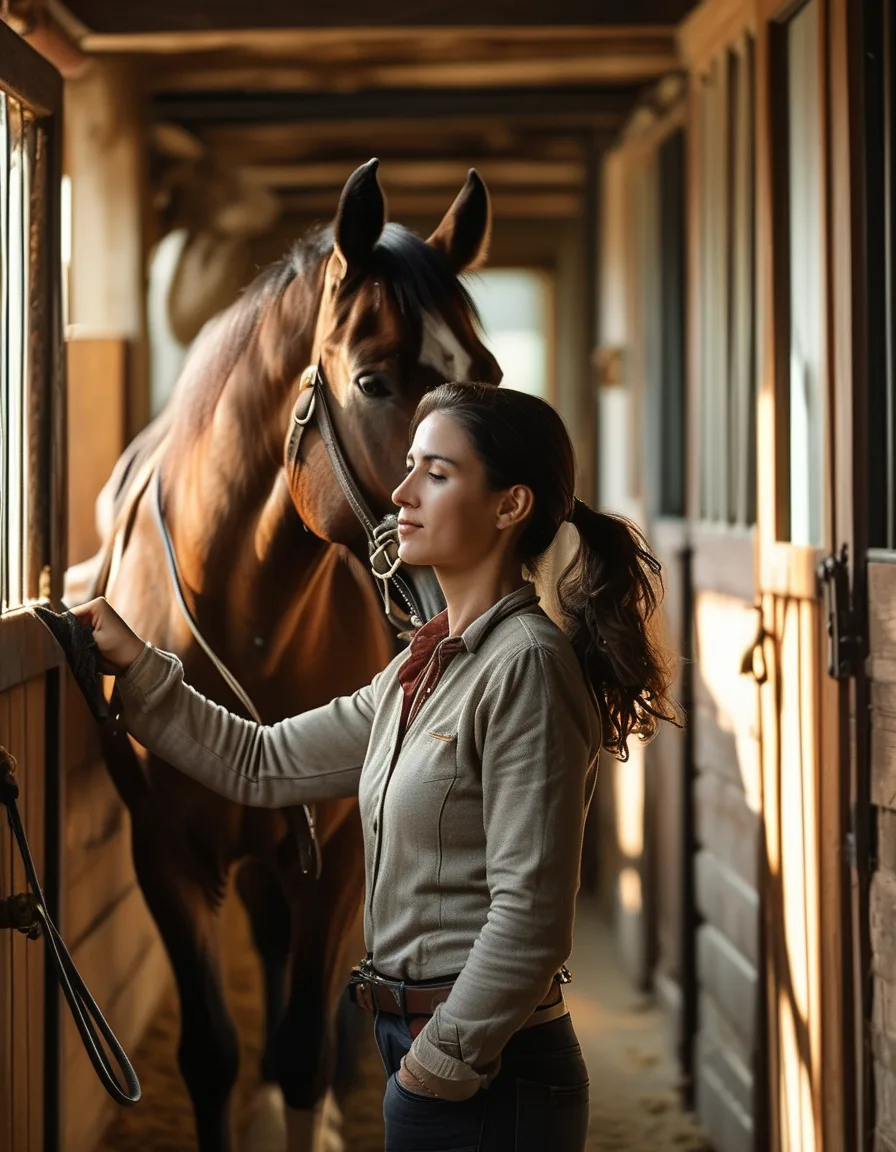
What lesson riders should notice: the normal baselines (the resting demeanor, the clean-ish nostrils, the weight-bearing evenness — the horse’s normal learned so abnormal shows), the red-flags-to-report list (the lameness and head-bobbing at walk, the heat in a leg, the not-eating horse, the rolling-repeatedly colic signal — the reported-immediately tier; the observation being the lesson rider’s contribution), the feeding rules (the barn’s feed chart being law — the no-unauthorized-treats policy; the grass-and-grain basics; the water-always principle), the seasonal awarenesses (the summer’s flies-and-heat management, the winter’s blanket questions — the seasonal care from the seasonal doctrine as barn conversation topics), and the learn-by-asking culture (the barn staff’s knowledge freely shared with the curious — the questions welcomed per the community doctrine; the horse-care books and pony-club resources for the hungry).
The Barn Citizenship
Being a barn person: the chore participation (the sweep-after-yourself standard — the tack cleaned and racked; the barn chores volunteered as the fast-track to belonging per the community doctrine), the barn-rules respect (the arena schedules, the quiet-around-horses culture, the gate-and-door discipline), the lesson-horse appreciation (the school horse’s workload honored — the post-ride thanks, the occasional apple by policy; the retired-lesson-horse affection being barn culture at its best), the learning ladder (the half-lease and care-days options as the next step — the horse care deepening toward the ownership question per the progression doctrine; the years-away honesty), the community payoff (the barn as the village from the community doctrine — the all-ages friendships and the shared-passion belonging), and the closing frame (the care being half the horse world’s gift — the responsibility, the animal literacy and the quiet barn hours; the rider who grooms well riding better; the partnership, built on the ground first). Curry-brush-pick before every ride, learn the normal, sweep your aisle: the horsemanship, grown beyond the saddle.
Horsemanship is mostly ground care: the curry-stiff-soft brush sequence, daily hoof picking, and grooming-as-health-scan. Learn approach and leading safety, the barn’s red-flag list (lameness, heat, colic rolling), and sweep your aisle — the rider who cares well rides better.
Keep Reading
This article is for general informational and styling purposes only. Fit, sizing, and product availability may vary.