Before the Saddle: Groundwork, Grooming and the Bond That Makes Riding Work
New riders count progress in canters; horsemen count it in the quiet stuff — the leading, the grooming, the reading of ears and weight shifts. Groundwork is where the horse decides what it thinks of you, and where half of riding’s benefits live before you ever mount.

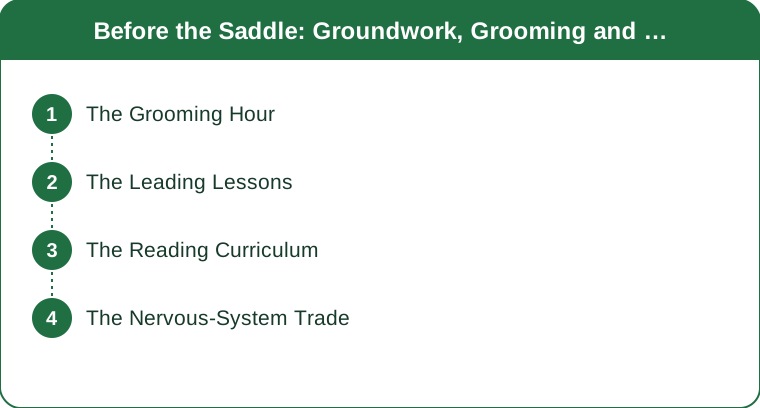
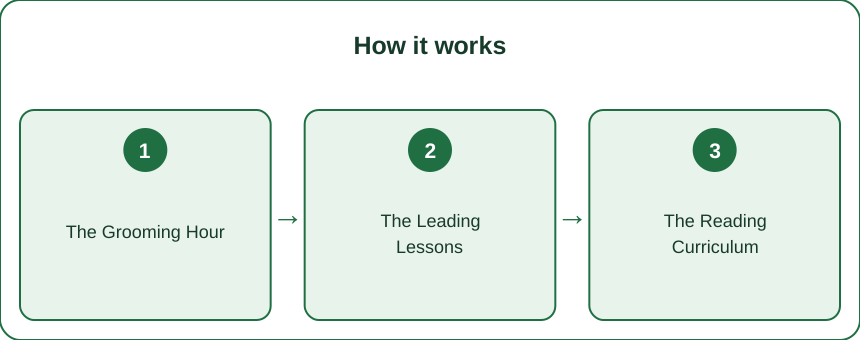
The Grooming Hour
Currying and brushing is bonding disguised as chores: horses groom herd-mates to build alliance, and your brush strokes register in the same social ledger. It is also honest exercise — 20 minutes of proper grooming is upper-body work with a 1,200-pound witness.
The Leading Lessons
Leading a horse well — your shoulder at its head, clear intentions, no dragging or being dragged — is the relationship’s first negotiation. Horses follow confidence and read hesitation instantly; the lead rope is a biofeedback cable, and groundwork is where your signals get coherent.

The Reading Curriculum
Ears (forward curious, pinned annoyed), weight shifts, tail language, the lowered head of relaxation: the horse publishes its state constantly, and riders who read it ride safer and calmer. The barn’s real syllabus is this vocabulary — the saddle work just examines it.
The Nervous-System Trade
Groundwork runs the equine-calm exchange both directions: your steady breathing settles the horse; the horse’s settling settles you (the biofeedback loop the therapeutic-riding research keeps documenting). The bond that makes riding work was never built at the canter — it was built with a brush, at ground level, on quiet Tuesdays.
Groom like it counts, lead like you mean it, read the ears. The saddle gets the photos — the ground gets the relationship, and the relationship is what the horse remembers next lesson.
Keep Reading
This article is for general informational and styling purposes only. Fit, sizing, and product availability may vary.