Why Your Ankles Ache After Riding Lessons (It's Not Your Boots)
Quick Answer: Ankle soreness after riding lessons is usually caused by gripping the stirrup with your toes or riding with your heels not pushed down, not by your boots — correcting heel position and stirrup placement on the ball of your foot resolves most cases within a few lessons.
You’ve blamed everything from cheap boots to weak ankles for the soreness that shows up after every lesson, but for most beginners the real cause is a foot position habit that’s completely fixable once you know what to look for.

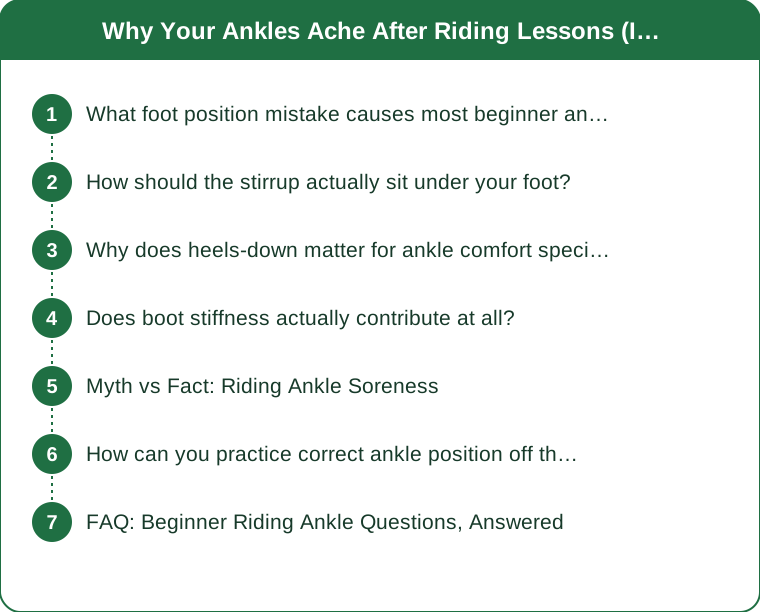
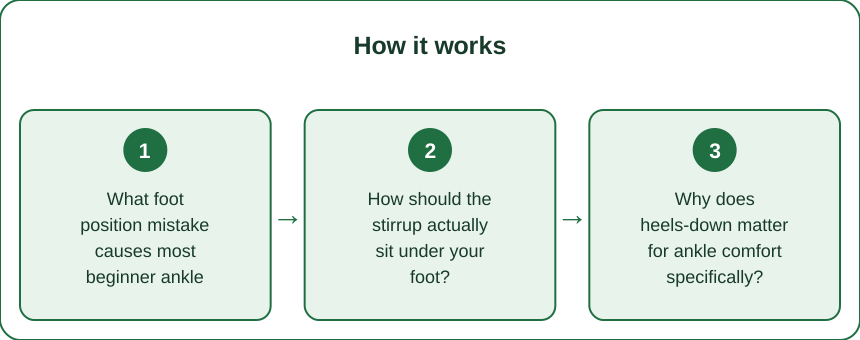
What foot position mistake causes most beginner ankle soreness?
The most common issue is placing too much of your foot in the stirrup (rather than just the ball of your foot) or letting your heels ride level with or above your toes instead of pressed down. Both force your ankle to work harder to stabilize your leg, especially at the trot and canter, leading to the burning, achy feeling many beginners describe after a lesson.
Gripping the stirrup with your toes, a common beginner reflex when feeling unstable, also tightens the whole lower leg and ankle in a way that causes soreness even in a 30-45 minute lesson.
How should the stirrup actually sit under your foot?
The stirrup should rest under the ball of your foot, not further back toward your arch or forward toward your toes — this position allows your ankle to flex and absorb the horse’s movement rather than locking rigid. Riding with too much foot in the stirrup reduces this flexibility and transfers more shock directly into the ankle joint.
A quick check during a lesson: if you can wiggle your heel down and feel the stirrup bar clearly under the ball of your foot, you’re in the right position.
Why does heels-down matter for ankle comfort specifically?
Pushing your heels down engages your calf muscles to help absorb movement, acting like a shock absorber for your ankle joint with every stride. Riding with heels level or up removes that shock absorption, leaving the ankle joint itself to take the impact directly, which is a big part of why it aches afterward.
This is also a safety fundamental, not just a comfort one — heels down keeps your foot from sliding through the stirrup if you lose balance.

Does boot stiffness actually contribute at all?
It can play a smaller supporting role — very stiff, unbroken-in boots can restrict natural ankle flex, compounding an already-strained ankle from foot position issues. But well broken-in boots with a properly positioned foot rarely cause soreness on their own, which is why boot-blaming often misses the bigger issue.
If you’ve corrected your foot position and heel-down habit and soreness persists, boot fit and stiffness are worth examining next, but they’re rarely the primary cause for most beginners.
Myth vs Fact: Riding Ankle Soreness
Myth: sore ankles after riding just mean you need to ‘ride more’ to toughen up. Fact: while some initial adaptation soreness is normal in the first few lessons, ongoing significant soreness usually points to a correctable position issue, not a conditioning gap you have to push through.
Myth: gripping tightly with your lower leg means you’re riding correctly. Fact: excessive gripping, especially through the ankle and calf, actually creates instability and soreness — a relaxed, heels-down leg with light contact is both more effective and far more comfortable.
How can you practice correct ankle position off the horse?
Standing with your weight shifted slightly onto the balls of your feet and heels pressed down, similar to a very slight calf stretch, for a minute or two daily builds the flexibility and muscle memory needed for correct riding position. Many instructors also recommend practicing ‘heels down’ awareness while standing in stirrups during ground lessons or mounting practice before ever moving at a trot.
FAQ: Beginner Riding Ankle Questions, Answered
How many lessons does it typically take to stop feeling ankle soreness?
Most beginners notice significant improvement within 4-6 lessons once heel-down habit and correct stirrup placement become more automatic, though some mild adaptation soreness in the first two lessons is completely normal.
Should you tell your instructor about ankle soreness?
Yes, definitely — instructors can watch your specific foot position during a lesson and correct it in real time far more effectively than troubleshooting it on your own afterward.
Can stretching before a lesson help prevent ankle soreness?
A few minutes of calf and ankle stretching before mounting can help, especially for beginners with naturally tight calves, though correcting stirrup and heel position addresses the root cause more directly than stretching alone.
TL;DR:
- Ankle soreness after lessons is usually a stirrup and heel position issue, not your boots
- The stirrup should sit under the ball of your foot, not further back or forward
- Heels down engages your calf as a shock absorber, protecting the ankle joint itself
- Tell your instructor — real-time correction fixes this faster than troubleshooting alone
Sore ankles aren’t a sign you’re not cut out for riding — they’re usually just your feet asking for a small position fix that most riders figure out within their first month.
Keep Reading
This article is for general informational and styling purposes only. Fit, sizing, and product availability may vary.