The First Canter: Managing the Fear That Arrives Right Before the Best Part
Quick Answer: Fear before the first canter is near-universal and physiologically sensible — you’re adding speed and a new rhythm atop a still-fragile trot seat. The path through: canter only when your trot seat is genuinely secure (your instructor’s call, not the lesson-count’s), understand the gait first (it’s a rocking three-beat — often smoother than trot), use the lunge-line or controlled-corner setup, and manage the fear loop with exhale-counting, because a clenched rider creates the exact instability she fears. Almost every rider calls the canter the best part — afterward.
There’s a moment in every adult beginner’s riding journey: the instructor says ‘next lesson, we’ll try cantering,’ and the week between fills with a very specific dread. That dread deserves respect — and context: it sits at the gate of the exact thing people ride horses for.
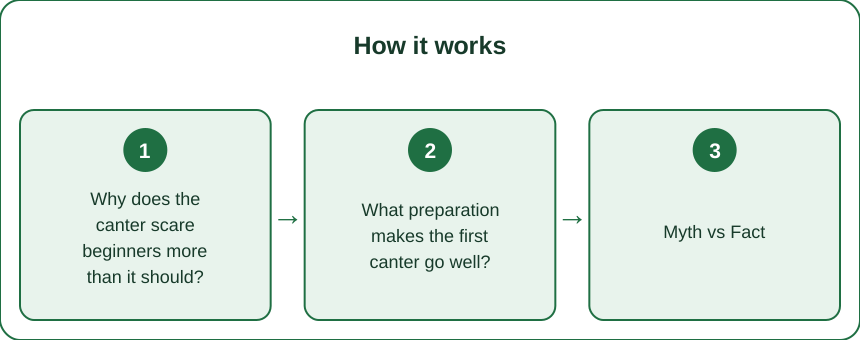
Why does the canter scare beginners more than it should?
The rational kernel: canter is faster, the horse’s motion changes character entirely, and you haven’t done it before — novelty plus speed on a large animal is a legitimate alertness trigger.
The irrational amplifiers worth deflating:
- The gallop conflation: screen-trained brains file ‘canter’ next to racing footage — but the lesson canter is a controlled, rocking gait, and (the part nobody believes until they feel it) many riders find it smoother than the trot they’ve been bouncing through. The trot jackhammers; the canter rocks.
- The anticipation loop: fear peaks before the transition, not during the gait — the waiting week and the moments before the aid are the worst part, which is classic anticipatory anxiety and shrinks dramatically after one repetition.
- The clench paradox: frightened riders grip with knees, curl forward, and hold breath — three moves that genuinely reduce stability, creating the wobble that confirms the fear. This is the actual risk of cantering scared, and it’s addressable — which is what the preparation below is for.
Horses add one more variable: they read tension. A rider breathing and neutral gets a softer horse than a rider vibrating with clench — managing your own nervous system is, literally, riding technique. This is general information, not medical advice.
What preparation makes the first canter go well?
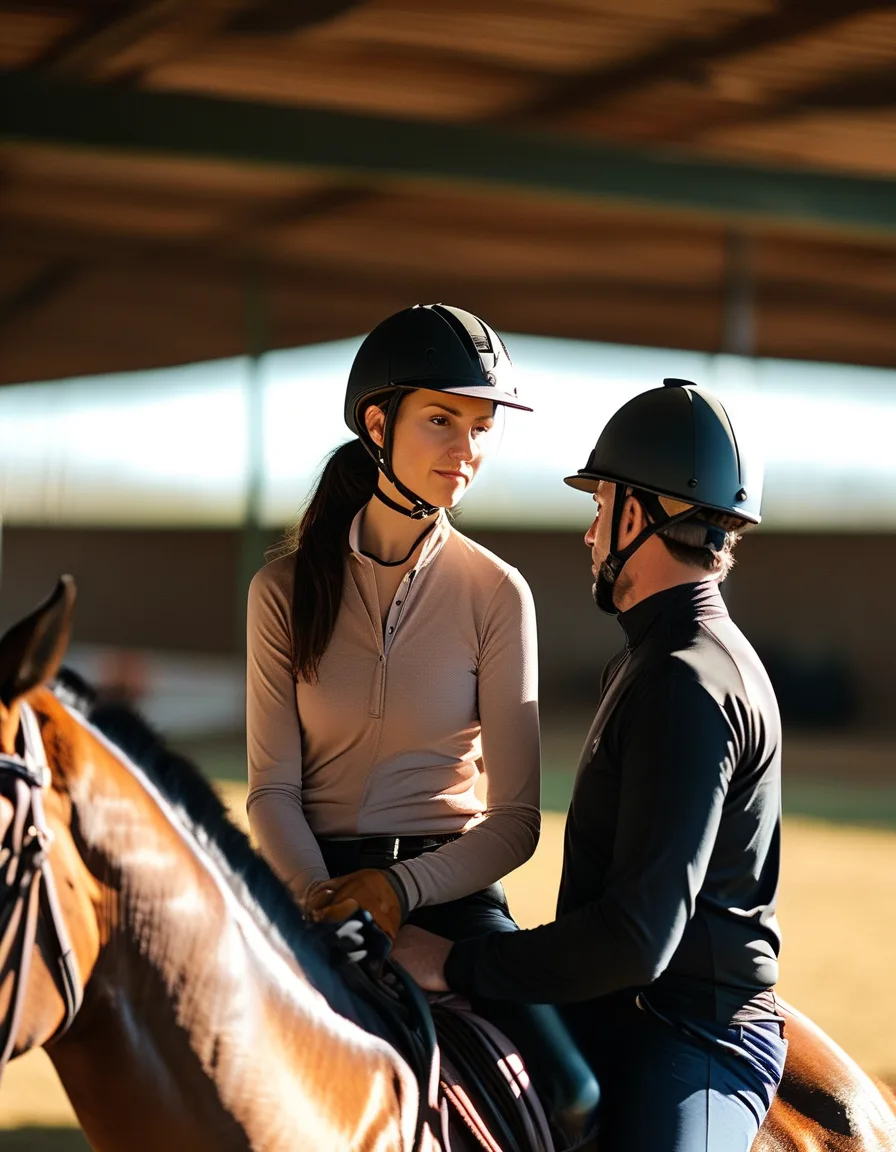
Readiness gates (your instructor owns these, but know them): a balanced, independent trot seat — steering, transitions, and sitting trot moments without balancing on the reins — plus comfort with faster trot work. Cantering before the seat exists is where the bad stories come from; a good program won’t send you early, and asking to wait another lesson is riding maturity, not cowardice.
Understand the gait mechanics beforehand: canter is three beats with a moment of suspension — the motion under you is a rocking scoop, and the seat’s job is to follow it with a relaxed lower back, not to grip against it. Watching slow-motion canter videos and visualizing the rock the week before genuinely helps (the anticipation week might as well train something).
The setup menu (from most to less supported): lunge-line canter (instructor controls the horse; you focus purely on seat — the gold-standard first canter), a steady schoolmaster horse in a controlled corner-to-corner stretch, then progressively longer canters as the seat proves itself.
In-the-moment protocol: exhale longly before asking (the aid works better from a breathing rider), eyes up and ahead (looking down curls you forward), a verbal count with the rhythm (‘one-two-three’) to occupy the fear channel, and permission-in-advance to come back to trot the moment you want — knowing the exit exists is what lets riders stay in.
And afterward: expect the laugh. The post-first-canter grin is a riding-school constant — the gap between the feared thing and the felt thing is the sport’s best welcome gift.
Myth vs Fact: Canter Fear Edition
Myth: Real riders aren’t scared. Fact: Ask any barn — canter nerves are the norm for adult beginners, returning riders, and plenty of experienced riders on new horses. Adults carry risk-awareness kids don’t; the fear is a feature of a functioning adult brain meeting a real activity, and managing it is a learnable riding skill like any other.
Myth: If you’re scared, your body will do the wrong thing no matter what. Fact: The clench responses are trainable — exhale protocols, eyes-up habits, and lunge-line repetitions build a seat that stays functional while nervous. Sports psychology’s whole premise applies on horseback: you don’t wait for fear to vanish; you install behaviors that run alongside it until it shrinks.
Myth: A canter refusal or bad first attempt means you’re not a rider. Fact: First canters routinely include wrong leads, early trot-breaks, riders bouncing back to trot after three strides — all normal drafts of a skill under construction. The riders enjoying effortless canters around you all have first-canter stories; several of them involve the arena fence.
The honest safety note that belongs here: riding carries real risk — helmets always, reputable instruction, appropriately matched horses, and pushing pace on readiness rather than pride are the non-negotiables that make the fear conversation a comfort conversation rather than a warning one. This is general information, not medical advice.
FAQ: First Canter Questions, Answered
How many lessons until cantering is normal?
Wide honest range: many programs introduce it somewhere in the first few months of weekly lessons, and ‘normal-feeling’ typically arrives within a handful of canter sessions after that. Frequency matters more than the count — and lunge-line introductions compress the timeline safely.
Should I tell my instructor how nervous I am?
Emphatically yes — instructors calibrate horse choice, setup, and pacing to disclosed nerves, and the quiet-white-knuckle student is the harder one to keep safe. ‘I’m nervous about cantering and want the most supported version’ is a professional request, not a confession.
I cantered once, hated it, and want to stay at trot forever — okay?
Entirely — riding at walk and trot is complete, legitimate riding, and plenty of happy riders live there. Worth knowing: a rushed or rough first canter souring the gait is common and reversible with a better setup later, on your timeline or never. The horse doesn’t judge, and the good barns don’t either.
TL;DR:
- Canter fear is normal adult physiology at the gate of the sport’s best part — and the gait is often smoother than trot
- Readiness first (secure trot seat, instructor’s call), mechanics understood, lunge-line as the gold-standard introduction
- In the moment: long exhale, eyes up, count the rhythm, exit-permission pre-granted
- The clench is the real risk and it’s trainable; disclosed nerves get better setups
The week of dread ends the same way at every barn — with the grin, three beats at a time. This is general information, not medical advice.
Keep Reading
This article is for general informational and styling purposes only. Fit, sizing, and product availability may vary.