7 Signs You're Actually Ready to Canter for the First Time
Quick Answer: Readiness to canter usually comes down to a secure, independent seat at trot without relying on the reins for balance, consistent control of speed and direction at trot and posting trot competence, rather than raw confidence or enthusiasm — most instructors introduce canter once these specific trot fundamentals are solid, not on a fixed timeline.
Wanting to canter and being ready to canter are two different things, and a good instructor is watching for the second one specifically, even while a rider is convinced the first one is all that matters.
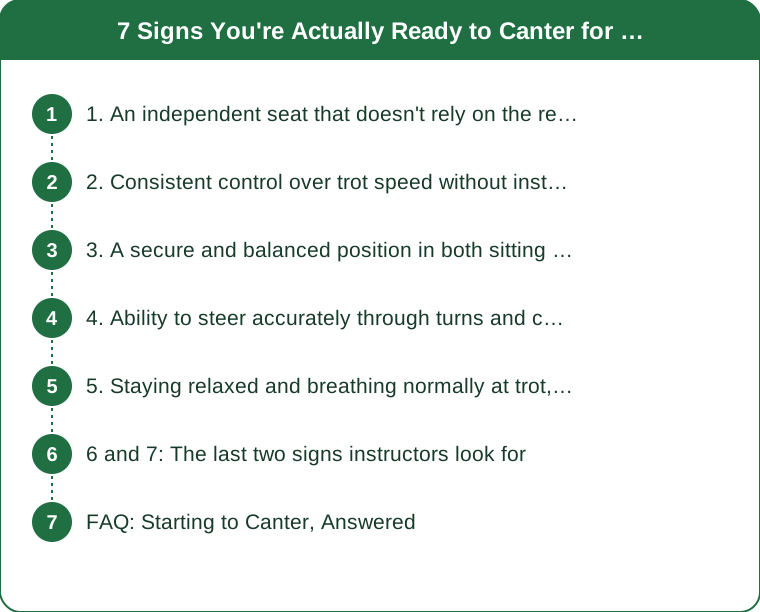
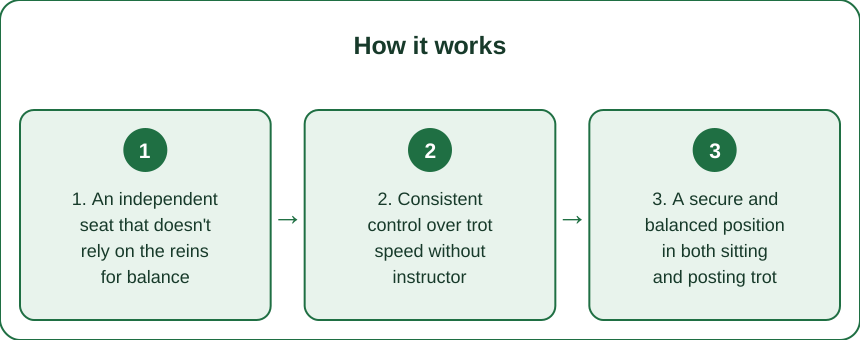
1. An independent seat that doesn’t rely on the reins for balance
If balance at trot still depends even slightly on holding the reins for stability rather than sitting securely through the seat and legs, that same reliance becomes more dangerous at canter’s greater speed and different rhythm, so instructors typically want to see reins used purely for steering and communication, not balance, before introducing canter.
2. Consistent control over trot speed without instructor prompting
Being able to ask the horse to speed up, slow down, and maintain a steady trot pace independently — without the instructor calling out constant reminders — demonstrates the kind of proactive control that canter requires, since canter transitions and pace adjustments happen faster and give less time to react than trot does.
3. A secure and balanced position in both sitting and posting trot
Comfort and balance in posting trot (rising with the horse’s rhythm) as well as sitting trot shows the core stability needed for canter’s rocking-horse motion, which combines elements of both; a rider who’s only solid in one of the two trot styles often struggles more with canter’s blended movement.
4. Ability to steer accurately through turns and circles at trot
Cantering typically starts on a circle or along a rail, and needing to steer accurately through consistent turns at trot first demonstrates the horse-and-rider communication needed to safely execute the same shapes at canter’s higher speed, where less time exists to correct a steering mistake.
5. Staying relaxed and breathing normally at trot, even during transitions
Visible tension — held breath, gripping with the legs, stiff arms — during trot transitions signals that the nervous system is still working hard just to manage trot, and instructors generally want to see a relaxed, breathing rider at trot before adding canter’s additional intensity on top of that existing effort.
6 and 7: The last two signs instructors look for
6. Understanding and correctly applying the aids for a canter transition
Even before physically cantering, being taught and able to correctly apply the outside leg, inside rein, and seat aids that ask for canter (even if the transition hasn’t been attempted yet) shows the rider has the technical knowledge ready to pair with the physical skill.
7. The instructor’s read on the specific horse-rider pairing
Readiness isn’t purely about the rider in isolation — an instructor is also assessing whether this specific horse is a good, forgiving match for a first canter (calm, consistent gait, not overly sensitive to timing errors), meaning two equally skilled riders might be cleared for canter at different points depending on which horse they’re paired with that day.
FAQ: Starting to Canter, Answered
How many lessons does it typically take before canter is introduced?
This varies widely by how often someone rides and their individual progress, ranging anywhere from a couple of months to closer to a year of regular lessons, so comparing timelines to other riders isn’t a reliable way to judge personal readiness.
Is it normal to feel nervous about the first canter even when technically ready?
Yes — nervousness about a new gait is common and separate from actual physical readiness; an instructor clearing someone for canter has already assessed the skill fundamentals, and some first-time nerves don’t override that assessment.
What usually happens during the very first canter attempt?
Most instructors start with just a few strides of canter on a lunge line or a very short straight stretch, prioritizing a short, controlled success over a longer attempt, before gradually building up duration in future lessons.
TL;DR:
- A secure, independent seat that doesn’t rely on the reins for balance is the core readiness signal
- Consistent trot speed and steering control without prompting matters more than enthusiasm
- Comfort in both sitting and posting trot reflects the stability canter’s motion requires
- The specific horse-rider pairing is part of the readiness call, not just the rider’s skill alone
Wanting to canter is universal among beginner riders — the seven signs above are what an instructor is actually watching for underneath that eagerness before saying yes.
Keep Reading
This article is for general informational and styling purposes only. Fit, sizing, and product availability may vary.