7 Mistakes That Make Your First Canter Feel Scarier Than It Needs to Be
Quick Answer: Most of what makes a first canter feel scary comes from a handful of fixable habits — gripping too hard with the legs, holding your breath, and tensing the upper body — rather than the canter itself being inherently more dangerous than a trot.
The canter has a reputation for being the scary gait, but a lot of that fear traces back to specific, correctable riding mistakes rather than the gait itself.

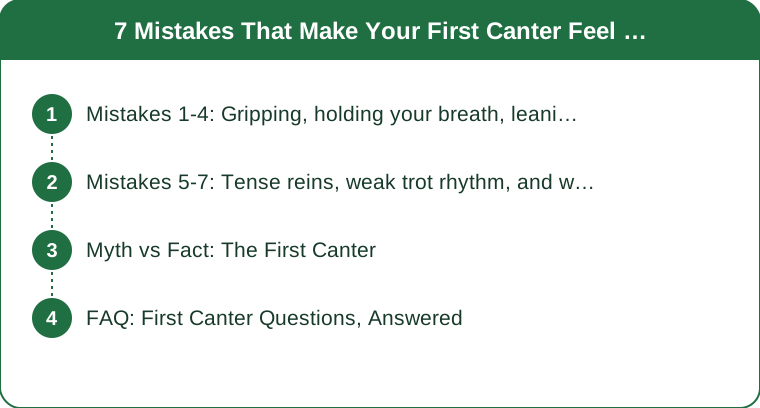
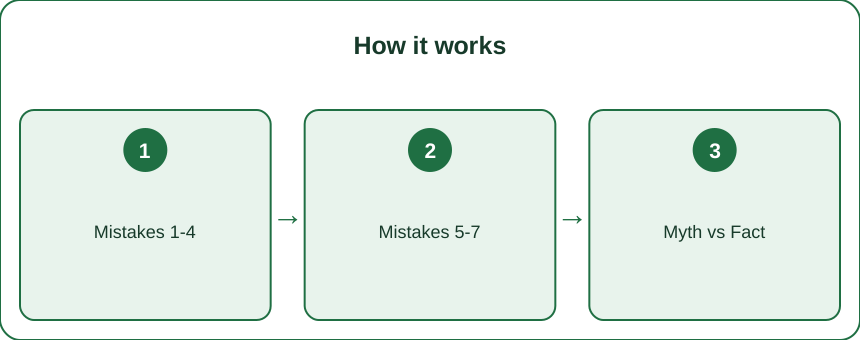
Mistakes 1-4: Gripping, holding your breath, leaning, and looking down
1. Gripping too hard with your legs
Excessive leg gripping tightens your hips and blocks your body’s ability to follow the horse’s rocking canter motion, which paradoxically makes you feel less secure, not more, since a rigid body bounces against the movement instead of absorbing it.
2. Holding your breath through the transition
Many first-time canter riders unconsciously hold their breath right as the transition happens, which increases physical tension throughout the body exactly when relaxation would help you move with the horse instead of against it.
3. Leaning forward too much, anticipating speed
The canter isn’t dramatically faster than a working trot, but riders often lean forward as if bracing for much greater speed, which shifts balance in a way that actually feels less stable than sitting upright and centered.
4. Looking down at the horse’s neck instead of ahead
Looking down shifts your balance forward and reduces your ability to anticipate the arena or your instructor’s next cue, both of which increase the feeling of being out of control during the transition.
Mistakes 5-7: Tense reins, weak trot rhythm, and wrong expectations
5. Tensing the arms and pulling back on the reins
A nervous grip on the reins during the transition can inadvertently signal the horse to slow or hesitate, creating an unpredictable, jerky transition that feels far scarier than a smooth one initiated with soft, steady contact.
6. Not establishing enough trot rhythm before asking for canter
Asking for canter from an inconsistent or rushed trot often produces a rougher, less balanced transition, since the horse doesn’t have a steady rhythm to canter off from — smoother transitions almost always start from a more established trot.
7. Expecting it to feel like trotting, just faster
The canter has a distinctly different rocking, three-beat motion compared to the trot’s two-beat bounce, and expecting the same sensation just faster sets up a mismatch between expectation and reality that itself contributes to the startled feeling many first-timers report.

Myth vs Fact: The First Canter
Myth: The canter is inherently more dangerous than the trot. Fact: With reasonable form, the canter is a smooth, rocking gait that many riders find more comfortable than a bouncy trot once they adjust to it.
Myth: Gripping tighter with your legs makes you more secure at canter. Fact: Excess gripping blocks your hips from following the motion, often making you feel less secure.
Myth: A scary-feeling first canter means you’re not ready for it. Fact: Most first-canter fear traces back to specific, fixable habits rather than a genuine readiness issue.
FAQ: First Canter Questions, Answered
How many lessons does it typically take before canter starts feeling comfortable?
Most beginners report canter starting to feel more natural somewhere between 5-10 dedicated practice sessions, though this varies by individual comfort level and lesson frequency.
Is it normal to feel nervous even after several canter attempts?
Yes — lingering nervousness for several sessions is common and doesn’t indicate a problem, especially if the underlying habits above are still being actively corrected.
Should I ask my instructor to canter on a lunge line first?
Many instructors do offer a lunge-line canter as an intermediate step, which removes the need to steer and lets you focus purely on following the motion — worth requesting if available.
TL;DR:
- Most first-canter fear comes from fixable habits, not the gait itself being more dangerous
- Gripping with the legs and holding your breath both increase tension exactly when relaxation helps
- A steady trot rhythm before asking for canter produces a smoother, less startling transition
- Comfort typically builds over 5-10 dedicated practice sessions with these habits actively corrected
If your first canter felt scarier than it should have, it’s very likely one or two of these habits — not a sign you’re not cut out for it.
Keep Reading
This article is for general informational and styling purposes only. Fit, sizing, and product availability may vary.