6 Signs Your Riding Boots Are Actually the Wrong Size, Not Just Unbroken-In
Quick Answer: Numb toes, heel lift over a quarter inch, calf pinching that doesn’t ease after a few rides, and pain that gets worse rather than better with wear are all signs of an actual sizing problem, not normal break-in — genuine break-in discomfort should measurably improve within the first few rides, not stay the same or worsen.

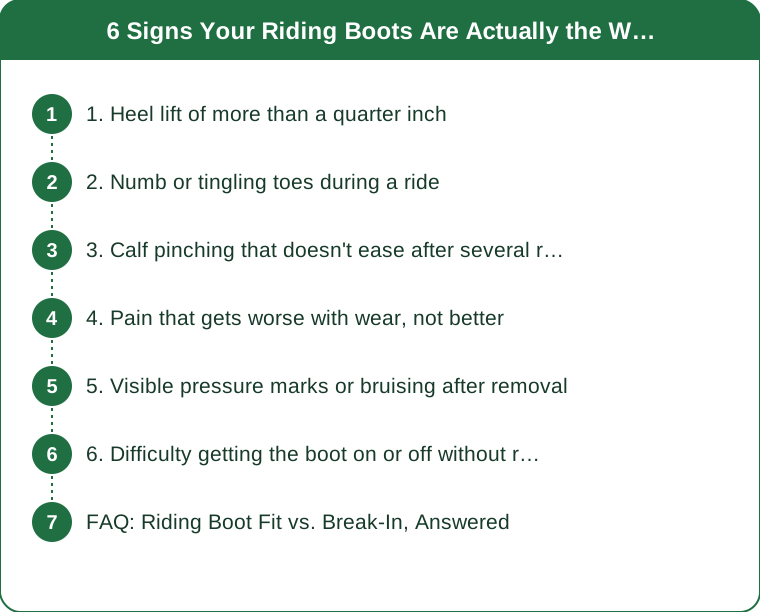
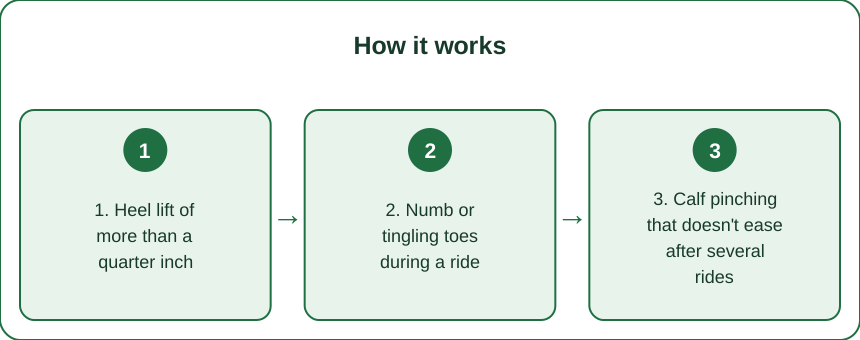
1. Heel lift of more than a quarter inch
Some heel movement is normal in a new boot, but lift beyond about a quarter inch means the boot isn’t anchoring your foot properly, which affects stirrup control and won’t fully resolve with break-in time alone.
2. Numb or tingling toes during a ride
Numbness signals actual circulation restriction from a too-narrow toe box, not just tightness that will loosen with wear. Break-in softens material flex, but it doesn’t meaningfully change the structural width of the toe box.
3. Calf pinching that doesn’t ease after several rides
A little initial calf tightness is expected, but pinching that stays the same or worsens after 4-5 rides usually means the calf circumference is genuinely too narrow for your leg, not a break-in issue.

4. Pain that gets worse with wear, not better
Genuine break-in discomfort trends toward improvement — mild soreness in ride one, less in ride three. Pain trending the opposite direction, getting worse the more you wear the boots, is a reliable signal of an actual fit mismatch.
5. Visible pressure marks or bruising after removal
Consistent, repeated pressure marks or bruising in the same spot after multiple rides indicates a structural fit problem at that pressure point, not just normal new-leather stiffness working itself out.
6. Difficulty getting the boot on or off without real struggle
Some snugness when putting boots on is expected, but needing significant force or help every single time, well past the first couple of wears, usually means the boot’s overall volume is too small for your foot and calf combination.
FAQ: Riding Boot Fit vs. Break-In, Answered
How long should genuine break-in actually take?
Most quality leather riding boots noticeably soften within 5-8 rides; if there’s no improvement by then, it’s more likely a fit issue than a break-in timeline issue.
Can a bootmaker or cobbler fix a too-narrow calf?
A professional stretch can sometimes add meaningful room to the calf area, though it has real limits and can’t fix a boot that’s more than about one size off.
Is buying slightly big and adding an insole a safer bet than buying snug?
Generally no for riding boots specifically — too much internal volume affects stirrup feel and control, so accurate initial sizing matters more here than in many other boot categories.
TL;DR:
- Heel lift over a quarter inch and toe numbness signal fit problems, not break-in
- Genuine break-in discomfort improves over several rides; real fit issues don’t
- Calf pinching that persists past 4-5 rides usually means the calf size is wrong
- Pain trending worse instead of better is the clearest single red flag
A few rides should tell the difference clearly — if it’s not improving, it’s the size, not the newness.
Keep Reading
This article is for general informational and styling purposes only. Fit, sizing, and product availability may vary.